SMALL STEPS, BIG CHANGES
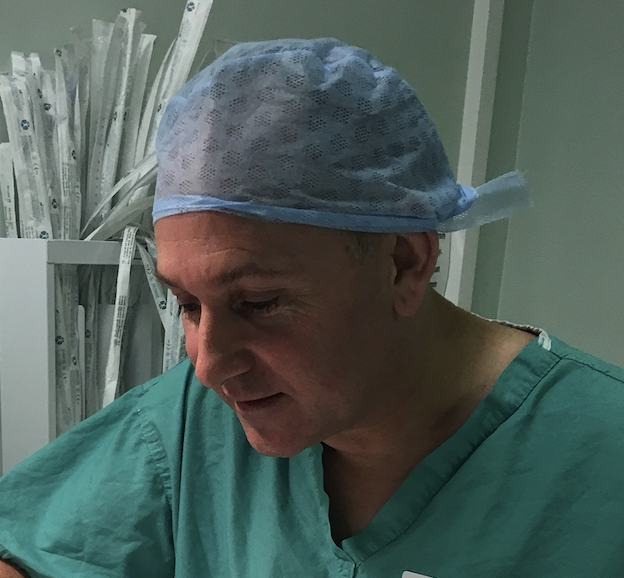
“Although conditions of the lower limb are now in the spotlight, there is also a need to change our mindset in how we reach to achieve measurable patient outcomes. Below is a compilation of guidance from personal experience and that of my colleagues working in lower limb management over the last 20 years. As quoted by Albert Einstein; if you always do what you always did, you will always get what you always got.”
PATIENT CONCORDANCE
The small things that can make a big difference. Compilation of experience from me and my colleagues over the last 26 years in clinical practice:
- Support and education can empower your patient | This can ensure they become a stakeholder in their own healthcare. Patient passport documents and support groups such as ‘Legs Matter’ can provide simple but effective information, which can make a BIG difference.
- Involve the family | Never feel you have got to do this on your own. Sometimes a relative, family friend or a career with a good relationship with your patient can be that firm but supportive helping hand.
- Peer support groups | These can help patients interact and support each other within a peer group experiencing similar challenges. ‘Leg Clubs’ established an effective model back in the early 90’s, bringing together socially isolated communities all experiencing problems of the lower limb.
- Autonomy | Working with your patient and showing a willingness to compromise can help the patient feel they have some control in an otherwise vulnerable and confusing situation.
- Understand your patient holistically | Asking the patient what their priorities and challenges are can help work towards a realistic approach to success. Understanding their needs and priorities can help shape a regime and select the right product at the right time. For example, your patient’s goal may be to attend a family event without worrying about bulky bandages. Understanding this can help shape a treatment regime, whether temporary or longer term.
- Slow but steady wins the race | Don’t feel like you need to solve all challenges at the same time. Providing a solution to a patient challenge can sometimes solve a problem before it starts. Giving footwear advice for example can alleviate any anxiety around being able to wear suitable and aesthetically pleasing footwear.
- It’s not what you do it’s the way that you say it | Your thoughts and aims may be clinically accurate, however consider a joint approach. Starting a dialogue with ‘maybe you could’ or ‘perhaps we could’ or ‘shall we try’ can position a plan as a partnership decision.
- Self-care | Delivering care in the current climate can be incredibly challenging. For many years we have been seeking to achieve a balance of self and shared care and COVID-19 has accelerated this process. We need to have a support process to identify those patients who can and are willing to self-care and those who still require regular intervention. When appropriate we should provide a plan of care that is easy to follow alongside support material to empower our patient, carer or family member. These should include hand hygiene, how to change a dressing, signs and symptoms of deterioration, how to raise concerns and realistic expectations of the patient/carer/family member.
For more information please contact us.
RIGHT PRODUCT, RIGHT PATIENT, RIGHT TIME
How to know what product to use, how and when:
- Long term and self-care management | Introduce your patient to hosiery as soon as possible and they are more likely to use their compression long-term and reduce the risk of recurrence.
- Evolution of Compression Therapy | Traditionally hosiery has been worn to prevent recurrence of venous leg ulcers, however more recently compression hosiery has also proven to be as effective as multi-component bandaging in healing venous ulceration.
- Hosiery First Line* | Due to the cost economic benefits and the potential positive implications for the patient, hosiery kits should be used as the first compression option except in those patients who do not meet the criteria for hosiery kit use (*subject to local guidelines and full leg ulcer assessment).
- When not to use hosiery | Although compression hosiery is recommended as a first-line option, it may not be suitable for dysmorphic limbs, rapidly decreasing oedema or exudate levels not contained within the dressing. These characteristics and observations are usually managed using compression bandages before hosiery is commenced.
- Non-Concordance | The reasons for non-concordance can be grouped into two interdependent major categories, (1) wear-comfort factors and (2) an intangible sense of restriction. Work with available options to find the most suitable compression option (open toe, closed-toe, zippers, 2 layers, wraps).
- Non-Concordance – what to do? | If a patient cannot or will not wear the chosen compression therapy, don’t give up. Try to have a sample pack of options and always be positive. “If this doesn’t work, don’t worry we can try something new”.
- Application & Removal | It can sometimes be difficult to apply and remove hosiery, especially if patients have very painful ulcers or dexterity issues. Hosiery can also cause trauma to those patients with very fragile skin during the application and removal process. Many application aids are now on drug tariff. These can provide an effective solution for patients who wear compression hosiery with a closed and open-toe.
For more information please contact us.
INDUSTRY PARTNERSHIPS
How can the medical industry really help Trusts, Clinicians and Patients in management of the lower limb? Many commercial partners have access to a multidisciplinary team not too dissimilar to the NHS. Alongside product specialists, sales managers and clinical teams, there are also many other useful roles which can help in areas not typically falling within our expertise. These include:
- Health economists | These can help investigate how our resources are used and focus on the distribution, availability and effectiveness of our service. There is more and more pressure for us to provide functional information regarding service delivery (CQUIN). I have utilised this resource, helping to provide information on costs, cost-effectiveness and strategic planning to guide policy and service delivery.
- Statisticians | By identifying statistical trends, health care providers can monitor local conditions and compare them to national and international trends. This guidance and collation of local data can assist in the allocation of public and private funds and possibly help fund a service redesign project (Doppler service, leg ulcer clinics & equipment). Another example of how to use this expertise is within everyday formulary decision making. It is important when we make formulary decisions that they deliver on the objective. Statisticians can help detail clinical scenarios to ensure a return on objective/investment is achieved.
- Business Managers | Ever thought of or been asked to consider how to make quality improvements? Whether it’s purchasing new equipment, expanding service centres and staffing levels or even a complete service redesign you will need a business plan. Nurses are under increasing pressure to up their business acumen to demonstrate service deliverables including impact, a return on investment and efficiencies. However, don’t despair! I have worked with industry partners to help build, guide and format plans to deliver successful business cases.
- Medical Writers | Before products come to market there are many clinical and regulatory hurdles industry have to overcome including research (safety and performance data), instructions for use and drug tariff applications. Companies will have expertise such as a medical writer who can apply the principles of clinical research and help develop clinical trial documents, describe research results, product use, and other medical information. MW’s can help present clinical findings, peer review posters, articles, conference presentations or information for patients, such as health advice leaflets and website material.
- Designers | Many industry partners either have onsite designers or have access to agencies for their marketing material. This service uses design methodologies and clinical collaboration to re-imagine the way that people interact with health care. This can be anything from creating visual tools that improve conversations between patients and clinicians to applying infographics to an otherwise text-heavy clinical pathway. I have many a time collaborated with different industry partners to help professionally deliver pathways, patient support documents and educational material.
- Medical Publication Agencies | Many publication agencies are working in the field of tissue viability and lower limb management. These agencies can be hugely supportive and can be seen as a 2nd arm to industry partners. Their offering is diverse, running conferences, publishing research, generating easy to use guides and playing a pinnacle role in education. Through working with these, I have learnt how to write articles, generate case study posters and produce meaningful material which can help influence theory in practice.
For more information please contact us.
THE DATA DILEMMA

Proving the worth of our leg ulcer services.
It is one thing to implement a high quality clinical service; it is another to clearly and consistently demonstrate its impact. Robust data collection is essential to evidence effectiveness, identify areas for improvement and support service development. In leg ulcer care, the ability to measure and articulate outcomes remains a persistent challenge. While there are strong examples of effective data use across the UK, there is significant opportunity to strengthen how services capture, analyse and communicate results.
Proving the Value of Leg Ulcer Services: How LLCS Can Help
LLCS supports services to move beyond delivery alone and clearly evidence impact, value and opportunity through targeted use of data. Drawing on real world experience of service redesign, we support organisations to translate routine clinical activity into meaningful, defensible outputs.
Digital systems and reporting readiness:
Identify and understand the clinical operating system in use (e.g. SystmOne, EMIS, Vision) and assess existing reporting capability. LLCS supports services to explore how data are currently captured, whether reports can be generated, and where system limitations or opportunities exist.
Optimising clinical coding and documentation:
While clinical coding is well established, it is often underutilised. LLCS helps services review documentation to identify elements that can be coded or structured to support meaningful analysis. This includes liaison with digital leads, template designers and information teams to ensure data capture aligns with service objectives. you have a digital lead or template designer in the Trust? Where is the Trust Business Information Unit and who is the Trust Information Analyst?
UndertakeService-level audit and gap analysis:
In my experience a service level audit examines criteria from four work streams ‘The Patient’, ‘Education’, ‘Documentation’ and the ‘Clinical Infrastructure’. This includes review of clinical governance, clinical practice, product selection and utilisation, care settings and equipment. A gap analysis then compares current performance with agreed or aspirational key performance indicators (KPIs).
Minimum data set alignment:
Documentation and assessment processes are reviewed against recognised best practice minimum data set requirements for lower limb assessment and leg ulcer care. This ensures services are collecting the right data to evidence quality, safety and outcomes.
From data to delivery: project planning and business cases:
Audit findings, change indicators, unknown variables and areas of success can be collated into a structured project plan. This provides a clear overview of priorities, timelines and dependencies and forms a robust foundation for service redesign proposals and business case development.
Enabling change through partnership
LLCS recognises that meaningful change often requires collaboration. Strategic industry partnerships can support services to move from theory to implementation, helping to embed innovation into everyday clinical practice.
I hope this inspires you to believe in change… remember, ‘if you always do what you always did, you will always get what you always got’ (Albert Einstein). As highlighted in ‘Industry Partnerships’ a commercial partnership can help materialise a theory into clinical practice.
For more information please contact us.